
Canadian startup founders regret selling their scaling companies to foreign buyers but felt they had no choice

Of 31 Canadian startup founders interviewed, most regretted having to sell their growing companies to foreign buyers but felt they had no choice given numerous barriers to scaling up here, according to a report by the Council of Canadian Innovators (CCI), The Impact Group and other partners.
 “Canadian firms are not failing to scale, but they're being acquired by foreign buyers at precisely the moment when scaling becomes more complex and capital intensive,” report lead author Lindsay Borthwick (photo at right), founder and principal at Lab Media Consulting, said during a CCI webinar.
“The founders repeatedly described reaching the same point in their growth where the range of viable options in Canada began to narrow,” she said.
The report, The Scale-Up Gap: From Value Creation to Value Retention, calls this a “scale conversion problem” that prevents turning startups’ early success into sustained, independent growth in Canada.
Founders consistently reported four patterns, or major barriers, blocking their companies from scaling up:
- investor risk-aversion and little quick access to capital.
- lack of domestic customer demand and first-customer procurement.
- fragmented and uncoordinated innovation support programs.
- lack of experienced executive business talent and networks.
“I would say the majority had no other choice but to sell to a foreign acquirer. They were reaching the point where they needed capital, for example, and the capital was coming from outside of Canada,” Borthwick said.
The report found that in 93 percent of foreign acquisitions, Canadian-founded startups being bought by foreign companies – often in the U.S. – leadership and strategic executive decision-making roles left Canada after the acquisitions.
“Pretty much all the founders I spoke to wished they could have remained in Canada,” Borthwick said.
Subsequently, many of the Canadian founders went on to serve in senior positions at the acquiring foreign companies for a couple of months to a couple of years, she said.
“Sometimes that turned out well, but often it led to disappointment in the long run as the acquirers' priorities changed and the capital or the prioritization that was initially promised or the opening doors to certain markets failed to materialize,” she added.
“So I think many of the founders looked back with regret and felt like what they'd hoped would materialize did not,” Borthwick said.
“Canada has shown it can create innovative companies. The challenge now is helping more of them scale and stay,” she said.
 Jeffrey Crelinsten (photo at right), president and CEO of consultancy firm The Impact Group, said he was surprised by the report’s finding of how much of Canadian entrepreneurial leadership leaves the country when a scaling startup is acquired by a foreign entity.
“ I knew this was the case, but the extent to which it was the case really struck me – in 28 of the 30 cases, the control went out of the country,” he said. "In the other two, control was shared by the Canadians and the foreign acquirer."
“So that's gone. The IP [intellectual property] is gone. The growth potential is gone.”
Crelinsten said he has talked with policymakers who argue that despite the foreign acquisition, in many cases the jobs remain in Canada – often in a subsidiary of the foreign firm.
“I look on that as a consolation prize,” he said. “It’s not the gold. You're not winning gold in the Olympics of innovation when you sell a company outside of the country.”
“Despite the fact that there remains activity in Canada, as a Canadian I really feel we have to move the bar higher,” Crelinsten said.
 Webinar moderator Laurent Carbonneau (photo at right), vice-president of policy and advocacy at CCI, noted the report found that another barrier to scaling in Canada is the paucity of experienced company founders, leaders and senior management, along with the networks needed to support them.
“It makes me think like we're exactly losing the kind of feedstock or seed corn for precisely those capabilities that are really scarce in Canada,” Carbonneau said.
Producing the best product on the market doesn’t guarantee success
For the report, Borthwick interviewed 31 founders and senior executives across 30 companies.
 One of them is Kyle Briggs (photo at left), co-founder of the SAIL Fund, a not-for-profit venture philanthropy fund that supports pre-revenue companies commercializing research. He is the entrepreneur-in-residence in the Faculty of Science at the University of Ottawa, where he helps scientists start companies, and the author of CanInnovate.
Briggs is also the former co-founder and CEO of Northern Nanopore Instruments, a company spun out of his PhD research, bootstrapped over four years and then sold to a foreign firm.
Briggs said his startup, which operated in the deep tech and research commercialization space, had a product and revenues starting from day one.
The company had international customers in Europe, the U.S. and Asia, but no customers in Canada.
That is a recurring problem for Canadian startups identified in the Scale-Up Gap report, along with risk-adverse Canadian investors who are reluctant to invest in a homegrown early-stage company.
“We definitely ran into issues with risk tolerance,” Briggs said. “We definitely ran into issues where early investors, angel investors wanted to see milestones before investing” – [milestones that] would be inaccessible without investment to get to that point.”
Briggs and his partners bootstrapped the company, which was based on single-molecule sensing technology, for four years, but reached the stage when they needed to expand and scale up.
“At that point, we were ultimately unable to secure investment from both non-dilutive and dilutive sources in Canada,” Briggs said.
Faced with that barrier, Briggs and his partners sold their company to a U.K.-based DNA sequencing firm in the fall of 2023.
Briggs said his experience as a Canadian founder “later turned into all of the advocacy work I now do around the early stages of research commercialization, and trying to shine a light on some of the challenges in the hopes that we can find ways to make it easier for the next generation.”
Borthwick said one of the report’s findings that surprised her was how high-quality some of the Canadian-made products were, yet the companies still could not scale up in Canada.
“These were companies that were hearing from their customers that the technology was far and away the best on the market. And still their path to success was so challenging,” she said.
“I kept hearing Canadian technology often is really at the top of the pinnacle, like the software, for example, that we produce is outstanding. And the customers recognize this, but still the founders couldn't find the support they needed to get to the next stage,” Borthwick said.
“It really was surprising because you kind of assume that if you build something great, success will follow,” she added. “And these were people who seemed to have built really terrific networks that had done all the right things.”
Many founders that Borthwick interviewed described difficulty accessing early domestic buyers, particularly through procurement and regulated markets.
Several founders emphasized that procurement systems in Canada often required proof-of-scale, before the growing companies had sufficient support and the opportunity to demonstrate proof-of-scale.
“As a result, several told us that they felt they almost had to win in the U.S. first before Canadian customers would take notice. So they had to find a market elsewhere in which they could pilot their products or begin to grow,” Borthwick said.
Securing investment requires having a sizeable pool of companies
Another barrier to scaling in Canada was companies struggling to access sufficient capital, quickly and at the right time to propel the company forward.
Briggs pointed out that capital flows to where risk-adjusted returns justify it relative to other asset classes.
“If you want the private sector invested in the scale-up phase [in Canada], you need to create conditions in which those risk-adjusted returns exist,” he said.
Briggs cited work by Dan Gray, a U.K.-based writer and research lead at Odin, who noted that the skill of an investor to pick good companies only matters to the extent that there’s a pool of good companies to choose from. “The best investor in the world picking from a shallow pool is not going to hit very good returns.”
In Canada, Briggs added, access to capital gets hollowed out to become a shallow pool before scale-up investors can come in at a point where having a pool of good companies to choose from helps reduce the risk of investing.
“And that's not to say that the companies interviewed [for the report] were not great companies,” Briggs said. “But it’s more a reflection of the perception that the ecosystem as a whole doesn't produce that deep pool of candidates from which to choose.”
It’s important to provide support at every stage of the investment pipeline, from early-stage startup to scaling and later-stage funding rounds, he noted. “If any one part of that pipeline fails, the entire process fails. So it’s really not a question of where in the pipeline the challenges exist. It's the entire thing.”
“And we need appropriate support at each stage and to resource all of them together to be able to succeed as a whole,” Briggs said.
Borthwick said many founders said the barrier was not just having access to capital, but having access to capital quickly at crucial times.
“There were a number of founders who had signed contracts in hand for tens of billions of dollars’ worth of new business, and just couldn't get the money or couldn't get the money quickly enough to scale their enterprise to fulfill those contracts. So something's missing there.”
Borthwick said founders also lamented the lack of expertise in Canada’s investment community to understand their companies, recognize the value of their products, and provide support.
“Even at the level of CFOs [chief financial officers], there just doesn't seem to be the right experience in Canada. And with that, maybe a lack of ambition among CFOs here to really build these anchor companies,” she said.
When it comes to training and retaining experienced founders, executive management and knowledgeable investors in Canada, Briggs pointed out that there are only a handful of local innovation ecosystems in the country that effectively create and recycle such talent.
One is the Waterloo, Ont. region that has built a successful commercialization engine based on serial founders staying in the region, securing technical teams from research laboratories and building new companies.
“There are certainly models in Canada of places that are effective at retaining that talent, but it's not necessarily the norm. And what is often the case, in what determines whether or not that talent stays, is the local ecosystem,” he said.
Like in the San Francisco-Silicon Valley ecosystem, having that base of talent attracts the capital, which in turn attracts the experienced business people who can build companies through access to that capital – creating a virtuous cycle.
In Canada, “a lot of the challenge revolves around embracing this focused ecosystem development ethos and recognizing that there's a concentration of all of these things in the same time and place that really enables that recycling of talent to happen,” Briggs said.
What happens after acquisition is crucial to building local innovation ecosystems
Briggs noted that foreign acquisition of Canadian companies isn’t of itself necessarily a bad thing.
He pointed to Microsoft’s acquisition in 2011 of Skype, which at the time was Estonia’s only real tech company. Skype was founded in 2003 by Swedish entrepreneur Niklas Zennström and Danish entrepreneur Janus Friis. But Skype was heavily based in Estonia, with the software and core technology created and engineered by Estonian developers
The Skype founders remained in Estonia and reinvested in the local ecosystem, Briggs said. “And over the next 20 years, the generational effects of that acquisition turned [Estonia] into one of the most digitally connected economies in Europe.”
“So there really is a nuance to the question of the positivity or negativity of a foreign acquisition and the stage at which it happens and the value that's been built in Canada before it happens, as well as what follows in terms of talent and capital recycling is really what determines the difference.”
Crelinsten said that embracing an approach to create strong local innovation ecosystems is very difficult for politicians who get their votes regionally and are pressured by lobbyists and interest groups to provide public support to those regions, which creates silos.
“If people can congregate around a success regionally without obstacles from a federation, then we'll get these centres of excellence. Because the key is that you want to play to your strengths,” he said.
One way of doing that might be to pick one or two sectors where Canada has inherent strengths – such as health and life sciences (which also has shown good returns on investment) or agriculture, and focus public support on those sectors, Crelinsten said.
He pointed to former U.S. president John Kennedy’s goal of landing on the Moon, which the entire nation aligned around. “When you’re aligned on a goal, you can do things,” Crelinsten said.
Canada could align on the goal of creating a specific number of anchor companies in the health and life sciences sector, for example, he said. “Pick a sector where we're strong, domestic investors will invest in them, and then others will follow,” rather than Canadian investors typically following foreign investment.
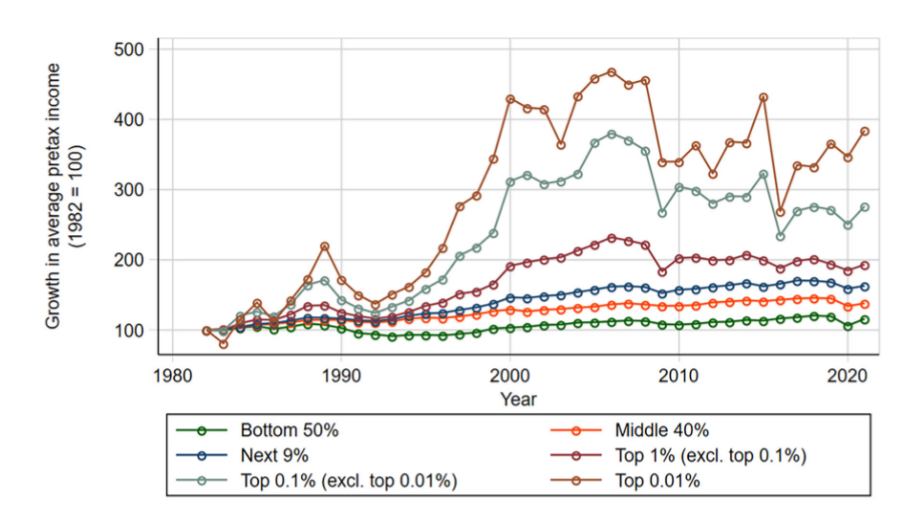
In general, the Canadian public is suspicious of successful investors and business people, given the widening gap in income equality, Crelinsten said.
But those successful business people are providing value in return for their wealth, including creating jobs, international reputation for Canada for their successful ventures, and engaging in philanthropy, he noted. “And I think we need to promote our successful entrepreneurs.”
“If the top leadership of the country would say Canada should become an innovation superpower, that would be a beginning,” Crelinsten said.
 Canada has no shortage of ambitious entrepreneurs building things the world needs,” said Patrick Searle (photo at right), chief executive officer of CCI.
“Governments should be focused on making Canada the best place for those entrepreneurs to build companies to global scale,” Searle said.
“When they do, we get the headquarters, intellectual property, high-value jobs, investment and decision-making that come with owning globally competitive companies. That’s how you build lasting economic strength in this country."
Editor’s note: To read Research Money’s comprehensive synopsis of The Scale-Up Gap: From Value Creation to Value Retention report, see: Canada’s structural “scale conversion problem” drives growing companies to foreign buyers.”
Jeffrey Crelinsten is CEO and publisher of Research Money.
R$
| Organizations: | |
| People: | |
| Topics: |



Events For Leaders in
Science, Tech, Innovation, and Policy
Discuss and learn from those in the know at our virtual and in-person events.
See Upcoming Events
You have 0 free articles remaining.
Don't miss out - start your free trial today.
Start your FREE trial Already a member? Log in
By using this website, you agree to our use of cookies. We use cookies to provide you with a great experience and to help our website run effectively in accordance with our Privacy Policy and Terms of Service.